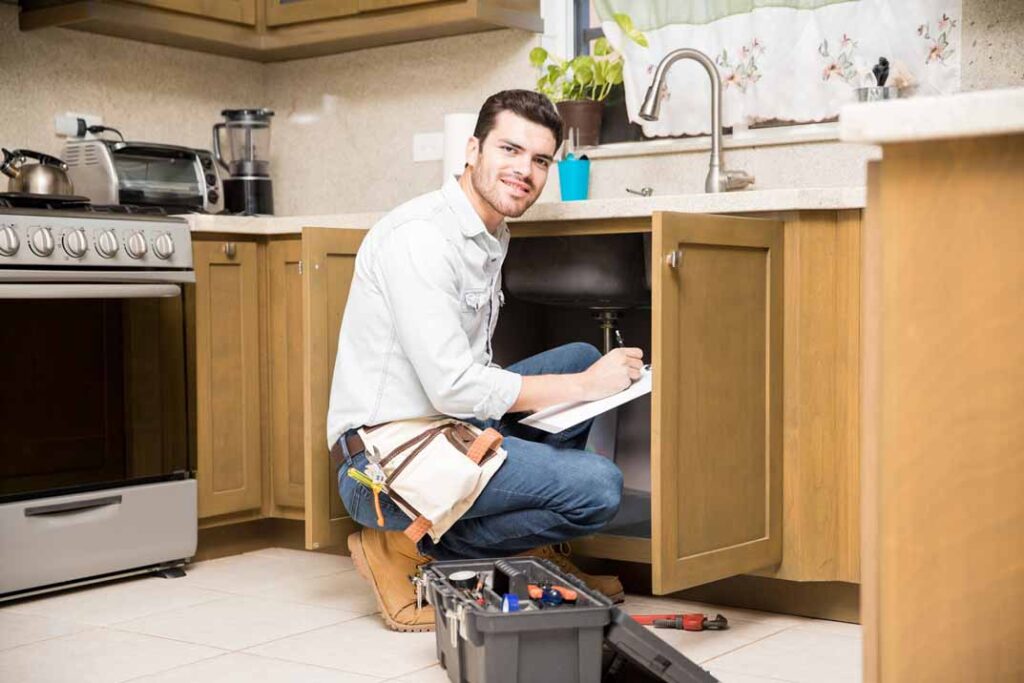
Imagine standing in your kitchen at 3:00 AM, the cold water rapidly rising above your ankles as a burst pipe floods your home. In that moment of sheer panic, you are not going to leisurely scroll through page two of Google, read long-winded company histories, or carefully weigh the aesthetic merits of a plumbing website’s design. You are going to pull out your smartphone, type “24 hour plumber near me,” and frantically tap the very first phone number that promises immediate rescue.
This visceral scenario perfectly illustrates why 24-hour plumber SEO is a completely different beast compared to traditional search engine optimization. When it comes to emergency home services, visibility is not just about brand awareness: it is a critical lifeline between a homeowner in distress and the solution you provide. The stakes are incredibly high, the competition is ruthless, and the conversion rates for top-ranking positions are astronomical. If you are not occupying those prime spots in the local map pack and organic results, you are leaving substantial revenue on the table every single night.
At Divramis, our plumbing SEO company team has spent over a decade helping roofing companies, contractors, and local home-service businesses climb Google’s rankings with white-hat strategies, transparent reporting, and measurable lead growth.
We understand that mastering the nuances of local emergency search requires more than just sprinkling a few keywords onto a homepage. It demands a highly specialized, technically sound, and aggressively localized approach. At Divramis, we have dedicated ourselves to getting our clients on the first page of Google with proven SEO strategies that can increase traffic by up to 1200%. Through our risk-free, white-hat optimization techniques, we tailor our methods to competitive niches like plumbing, ensuring that when the worst happens, your business is the first and only logical choice.
In this comprehensive guide, we are pulling back the curtain on the exact blueprint needed to dominate emergency local search today. From optimizing your Google Business Profile for late-night visibility to structuring rapid-indexing local pages and building unshakeable domain authority, this is your definitive roadmap to capturing urgent plumbing traffic and scaling your after-hours operations.
Understanding the Emergency Plumbing Search Intent
To effectively capture emergency plumbing traffic, we first need to deconstruct the psychology of the user and the specific search intent driving their query. In the SEO world, we generally categorize search intent into four buckets: informational, navigational, commercial investigation, and transactional. But, a midnight search for a “24 hour plumber” creates a hyper-accelerated subset of transactional intent that we like to call “urgent resolution intent.”
When a user initiates an emergency search, their cognitive load is overwhelmed by stress. They do not want to learn about the history of PVC piping or the structural integrity of copper valves: they want an immediate, definitive action. Google’s algorithm is acutely aware of this behavioral shift. Over the last few years, and particularly moving into, Google has refined its local search algorithms to prioritize what it terms “micro-moments”, specifically, the “I-want-to-buy” and “I-need-help-now” moments.
Because Google tracks behavioral signals such as dwell time, bounce rate, and click-through rate (CTR), the way users interact with your site during an emergency search directly impacts your future rankings. For instance, if your emergency plumbing page features a massive, easily tappable phone number, the user will click it and call. Even though they only spent fifteen seconds on your site, Google interprets that rapid click-to-call as a highly successful user experience. Conversely, if they land on a page buried in text and cannot find the phone number, they will immediately “pogo-stick” back to the search results. High pogo-sticking rates on emergency queries send a catastrophic signal to Google that your page failed to satisfy the urgent intent.
We structure our SEO strategies around this specific user journey. This means optimizing for a zero-friction experience where the answer to the user’s implicit question, “Can you fix my problem right now?”, is an overwhelming yes. Every element of the page must communicate speed, reliability, and immediate availability. Trust signals such as licenses, emergency response times (e.g., “30-Minute Dispatch”), and simple value propositions must be placed above the fold. By deeply understanding the panicked state of the searcher, we can align both our on-page content and our technical SEO to deliver exactly what Google, and the distressed homeowner, demands: a fast, trustworthy, and easily accessible solution.
Mastering Google Business Profile for After-Hours Visibility
For a 24-hour plumber, your website is technically your second most important digital asset. Your first is your Google Business Profile (GBP). The Local Pack, that coveted three-pack of map listings at the top of Google’s search results, is where the vast majority of emergency plumbing conversions occur. Mastering your GBP is not a set-it-and-forget-it task: it is an ongoing, dynamic process that requires meticulous attention to detail, especially when competing for after-hours visibility.
Google’s local algorithm relies on three primary pillars: Relevance, Distance, and Prominence. While you cannot physically change the distance between your dispatch center and the flooded house, you can heavily influence relevance and prominence. Besides, Google has introduced “openness” as a powerful ranking signal. If a search is conducted at 4:00 AM, Google’s algorithm will actively suppress businesses that are closed, regardless of how close they are to the searcher or how prominent they might be during daylight hours. This makes your GBP configuration the ultimate gatekeeper for emergency leads.
Leveraging 24/7 Hours, Attributes, and Urgent Categories
The foundation of an after-hours GBP strategy begins with category selection and hour configuration. Your primary category should reflect your core business, which is likely “Plumber.” But, the magic happens in the secondary categories. You must ensure you have selected “Emergency Plumbing Service,” “Drainage Service,” and, if applicable, “Water Damage Restoration Service.” These categories act as direct relevance signals to Google when a user searches for hyper-specific emergency terms.
Read more: The importance of social networking for business growth
Setting your hours to 24/7 is a non-negotiable requirement for capturing night-time traffic, but it comes with a strict caveat: you must actually be available. Google is increasingly aggressive about verifying business hours. If users report that nobody answered the phone at 2:00 AM, or if Google’s automated verification systems detect a discrepancy, your profile could face a temporary suspension or a severe drop in rankings.
Beyond hours, leveraging GBP attributes is a critical way to stand out. Attributes such as “Offers Same-Day Service,” “Locally Owned,” or even specific payment methods can be the deciding factor for a user comparing you to a competitor in the Local Pack. We ensure that our clients fully flesh out every available attribute. Also, we use the “Special Hours” feature religiously. If there is a major national holiday in Greece or the US, many competitors forget to update their hours, prompting Google to display a warning reading “Hours might differ.” By proactively confirming your 24/7 availability on Christmas Eve or Thanksgiving, you gain a massive competitive advantage when pipes inevitably freeze and burst.
Automating Review Generation from Late-Night Service Calls
Prominence in the map pack is heavily dictated by your review profile. But it’s not just the quantity and star rating of the reviews that matter: it’s the review velocity and the semantic content of the reviews themselves. Google scans review text for keywords to create “Justifications”, those bolded snippets of text that appear under a map listing (e.g., “Provides: emergency plumbing” or “…came out at 3 AM to fix our water heater…”).
Generating these highly specific reviews requires a system. Plumbers operating at 3:00 AM are exhausted: they are not going to remember to politely ask the homeowner for a Google review after a grueling job. This is why we carry out automated review generation systems. By integrating field service management software (like ServiceTitan or Jobber) with communication APIs (like Twilio or Zapier), we can trigger an automated SMS request exactly 30 minutes after the invoice is marked paid.
The timing and phrasing of this automated request are crucial. Instead of a generic “Please leave us a review,” the SMS should say: “We’re glad we could help you out in an emergency tonight. If our 24/7 team did a great job saving your home from water damage, a quick Google review helps other locals find us when they need help fast.” This prompts the homeowner to use words like “emergency,” “night,” and “fast” in their review, feeding the exact semantic data Google needs to rank your GBP higher for those specific after-hours search queries. At Divramis, we’ve seen this strategy alone increase map pack visibility by over 40% for targeted emergency terms.
Keyword Strategies Specifically for Emergency Situations
Traditional plumbing SEO often focuses on broad head terms like “plumbing services [City]” or “water heater installation.” While these are important for daytime operations, they represent a completely different funnel than emergency search. For 24-hour plumber SEO, the keyword strategy must pivot toward long-tail, high-urgency queries. The search volume for these terms might look lower in traditional SEO tools like Ahrefs or SEMrush, but that data is often misleading. Emergency queries are highly contextual, seasonal (spiking during winter freezes or heavy rains), and incredibly lucrative.
Our approach is to build a comprehensive keyword matrix that intersects service types with urgency modifiers and hyper-local geographical tags. We don’t just want to rank for the obvious terms: we want to capture the fractured, unpredictable, and voice-driven queries that panicked homeowners actually use.
Targeting High-Intent Queries and Long-Tail Local Modifiers
To effectively capture emergency traffic, we must target explicit high-intent queries. An explicit emergency query includes an urgency modifier. Examples include “24 hour plumber,” “emergency plumber near me,” “same day plumbing repair,” “after hours plumber,” and “weekend plumbing service.”
Read more: What is affiliate marketing and how to earn money from it
But, we also need to target implicit emergency queries. A user might not type the word “emergency,” but the nature of their problem implies immediate danger. Keywords like “burst pipe repair,” “overflowing toilet fix,” “basement flooding plumber,” or “gas leak plumber” carry inherent urgency. When we optimize a client’s website, we map these implicit emergency terms to dedicated service pages and ensure that the metadata, headers, and on-page copy clearly state that immediate, 24/7 help is available for these specific issues.
Besides, the rise of mobile and voice search has drastically altered how users phrase their emergencies. A homeowner holding a towel over a leaking pipe isn’t typing a perfectly capitalized query: they are speaking to Siri or Google Assistant. This leads to conversational, long-tail local modifiers such as “who can fix a broken pipe right now in [Neighborhood]” or “plumber open at midnight near [Landmark].”
To capture this traffic, we inject localized, conversational LSI (Latent Semantic Indexing) keywords naturally into the site’s content. We optimize for specific neighborhoods, suburbs, and surrounding counties, not just the primary metropolitan area. By creating a wide net of semantic relevance that pairs severe plumbing problems with urgent temporal modifiers (now, tonight, 24/7) and granular local modifiers, we ensure that our clients dominate the exact moment the search engine is queried.
Foundational Website Architecture for Rapid Indexing
A brilliant keyword strategy and a perfectly optimized GBP will fall flat if your website architecture cannot support the traffic or guide Google’s crawlers effectively. For a 24-hour plumber, the website must function as a high-speed, conversion-optimized machine. The architecture needs to be flat enough that Googlebot can crawl and index new local service pages rapidly, yet structured enough to pass link equity seamlessly from the homepage to the deepest neighborhood landing page.
We build websites on a foundation of technical excellence. This means pristine XML sitemaps, logical URL structures (e.g., domain.com/emergency-plumbing/city-name/), and an internal linking strategy that treats the primary emergency services page as the ultimate hub. But beyond crawler optimization, the architecture must be ruthlessly designed for the mobile user who needs help in seconds.
Optimizing for Mobile Speed and Click-to-Call Conversions
When a user is dealing with an emergency, every second your website takes to load increases the probability they will hit the “back” button and call your competitor. Over 80% of emergency plumbing searches occur on mobile devices, often on cellular networks rather than high-speed Wi-Fi. Hence, optimizing for Google’s Core Web Vitals, specifically Largest Contentful Paint (LCP) and First Input Delay (FID), is critical.
We achieve lightning-fast mobile speeds by eliminating render-blocking JavaScript, aggressively compressing images (using next-gen formats like WebP), and utilizing lightweight CSS frameworks. The hero section of an emergency page should load almost instantaneously. We avoid heavy background videos or massive sliders for these specific landing pages: instead, we rely on high-contrast, system-font typography that delivers the message immediately.
Once the page loads, the architecture must funnel the user directly to a phone call. We carry out sticky mobile headers featuring a prominent, contrasting “Call Now” button that follows the user as they scroll. Every phone number on the site is wrapped in a precise <a href="tel:+1234567890"> HTML tag to enable one-tap calling. Besides, we ensure these click-to-call events are tracked accurately using dynamic number insertion (DNI) tools like CallRail, configured carefully so as not to break the NAP (Name, Address, Phone number) consistency required by Google for local SEO.
Read more: 200 Google ranking factors revisited — first part
Structuring Dedicated Location Pages for Maximum Local Coverage
A single “Areas We Serve” page listing 50 different cities is no longer sufficient to rank in competitive local markets. To maximize local coverage, we architect a hub-and-spoke model consisting of dedicated location pages. But, Google heavily penalizes “doorway pages”, pages that are essentially duplicates of one another with only the city name swapped out.
To do this correctly, we create unique, hyper-local content for every target municipality. A dedicated location page for /24-hour-plumber-athens/ will feature specific local schema markup (LocalBusiness or ServiceAreaBusiness), an embedded Google Map of the specific service area, reviews pulled exclusively from customers in that specific region, and driving directions from local landmarks to demonstrate authentic local relevance.
We also integrate localized emergency content. For example, referencing the age of the plumbing infrastructure in a specific historic neighborhood or mentioning common winter freeze issues in a particular suburb proves to Google (and the user) that this is not a mass-produced template, but a highly relevant, localized resource. By structuring the site to house dozens of these high-quality, targeted location pages, we exponentially expand the geographic footprint where the client can trigger the local map pack and organic results.
Building High-Authority Citations and Local Backlinks
Off-page SEO remains a vital pillar of dominating local search. In the context of emergency plumbing, Google needs overwhelming proof that your business is legitimate, operational, and trusted by the local community. This trust is established through a robust profile of structured citations and high-authority local backlinks.
In a crisis, NAP (Name, Address, Phone number) consistency is scrutinized heavily by Google’s algorithms. If your business is listed as open 24/7 on Google, but a prominent directory lists your hours as 9-to-5, Google’s confidence in your data drops, and your rankings will plummet. We conduct comprehensive citation audits to ensure that every mention of your plumbing business across the web is perfectly aligned, projecting an undeniable signal of reliability.
Securing Trust Placements in Niche Home Service Directories
While generic directories like Yelp, YellowPages, and Foursquare are necessary foundational citations, they are not enough to move the needle in a highly competitive market. To truly dominate, we must secure trust placements in niche home service directories and localized community portals.
Our strategy involves securing risk-free, white-hat links from industry-specific authorities such as HomeAdvisor, Angie’s List, and the Better Business Bureau. But we go deeper. For our clients in Greece and internationally, we aggressively pursue links from local Chambers of Commerce, regional trade associations, and localized contractor boards.
Read more: 200 Google ranking factors revisited — second part
We also leverage local community link-building tactics. This includes sponsoring local youth sports teams, partnering with neighborhood watch programs, or writing guest columns on home maintenance for regional news blogs. A backlink from a highly relevant, geographically local website (such as a local hardware store’s blog or a prominent local real estate agency recommending your emergency services) carries significantly more weight in the local algorithm than a generic link from a high-DR international site. At Divramis, our ability to secure these hyper-local, niche-specific trust placements is exactly how we drive traffic increases of up to 1200% for our home service clients.
Creating Content That Captures Urgent Plumbing Traffic
A common misconception in local SEO is that content marketing and blogging are useless for emergency services. The logic goes: “Nobody reads a blog post when their house is flooding.” While it is true that a user won’t read a 2,000-word essay while standing in water, content marketing plays a massively strategic role in capturing urgent traffic just before the point of disaster, or in the frantic moments when they are trying to mitigate damage while waiting for help.
We create a specialized “immediate action” content funnel designed to capture long-tail emergency queries. For example, we author highly specific, scannable guides such as “How to Locate the Main Water Shut-Off Valve in [City] Homes,” “What to Do When Your Water Heater Starts Leaking,” or “How to Thaw Frozen Pipes Before They Burst.”
When a homeowner is frantically searching for “how to turn off main water valve,” and they land on your article, they are immediately presented with a quick, actionable answer. Once they have successfully turned off the water and the immediate panic subsides, the next logical step is to hire a professional to fix the broken pipe. Because you provided the life-saving information, and because your page features a prominent “Need this fixed permanently? We’re open 24/7, Call Now” CTA, you naturally capture that conversion.
Besides, we heavily use FAQPage Schema markup on these emergency content pieces. By answering common emergency questions clearly, your site can dominate the “People Also Ask” boxes and secure featured snippets at the very top of the SERP. This expands your search real estate, pushing competitors down the page.
We also recommend integrating video content into these pages. A quick 30-second YouTube video embedded on your site demonstrating how to shut off a gas valve not only provides immense user value but also increases dwell time and engages users who prefer visual instructions. By anticipating the panic-driven questions your customers have and providing instantaneous, authoritative answers, your content becomes a powerful lead-generation tool that operates silently 24 hours a day.
Conclusion
Mastering 24-hour plumber SEO is an intricate dance of technical precision, local algorithm manipulation, and deep psychological understanding of the user. It is not enough to simply exist online: you must be the most visible, the fastest loading, and the most trustworthy option at the exact moment a disaster strikes.
By strategically optimizing your Google Business Profile for after-hours relevance, aggressively targeting high-intent long-tail modifiers, engineering a mobile-first website architecture, and building authoritative local trust signals, you construct an impenetrable digital fortress. This blueprint ensures that when a panicked homeowner reaches for their phone in the middle of the night, your business is the unequivocal answer.
Read more: 200 Google ranking factors revisited — third part
At Divramis, we know that the difference between page one and page two is the difference between a thriving, scalable business and one struggling to keep the trucks running. Our proven, risk-free SEO strategies are designed to take the guesswork out of local search, delivering explosive traffic growth and consistent, high-quality emergency leads. The emergency plumbing market today will reward the fastest and the most relevant. It’s time to ensure your business dominates the darkest hours of the night.
Key Takeaways
- Optimizing your Google Business Profile with 24/7 hours and emergency-specific categories is the most critical factor for capturing late-night plumbing leads.
- A successful 24 hour plumber SEO strategy requires a lightning-fast, mobile-first website with prominent click-to-call buttons to convert panicked users.
- Target high-urgency and long-tail keywords, such as ‘burst pipe repair near me’ or ‘plumber open now’, to attract homeowners during a crisis.
- Create ‘immediate action’ content, like guides on how to shut off a water main, to build trust and capture leads at the moment of disaster.
- Build authority with consistent business citations and hyper-local backlinks from community organizations and relevant home service directories.
Frequently Asked Questions About SEO for Plumbers
Why is a Google Business Profile crucial for 24-hour plumber SEO?
Your Google Business Profile is your most important asset for emergency calls, as most users hire from the Google Maps pack. Proper 24/7 hour settings, emergency service categories, and reviews mentioning urgent jobs ensure you are visible during late-night searches when customers need immediate help.
What keywords work best for an emergency plumbing service?
Focus on high-urgency, long-tail keywords that reflect a crisis. Target phrases like “emergency plumber near me,” “burst pipe repair,” and “after hours plumber.” These queries capture users with immediate transactional intent, leading to higher-quality leads and better conversion rates for your business.
Is content like blog posts useful for 24-hour plumber SEO?
Yes, content that provides immediate answers to panicked questions is highly effective. Articles like “How to Shut Off Your Main Water Valve” capture users right before they hire a professional. By providing the solution, your brand builds instant trust and is positioned to win the service call.
How should a 24-hour plumber’s website be designed for conversions?
An emergency plumber’s website must be built for mobile speed and immediate action. Key elements include a fast-loading design, prominent click-to-call buttons that are always visible, and dedicated local landing pages. This zero-friction experience directly addresses the user’s urgent need and improves SEO performance.
How long does it take for 24-hour plumber SEO to show results?
While minor improvements can appear within 3 months, achieving significant results from a dedicated 24-hour plumber SEO strategy typically takes 6-12 months. The timeline depends on factors like your local market competition, current domain authority, and the consistency of the optimization efforts.
Can I just list my hours as 24/7 on Google without having staff available all night?
No, this is a risky practice that can harm your SEO. If Google verifies that you don’t answer calls during listed hours, or if users report it, your profile could be suspended or its rankings penalized. Accurate availability is a critical trust signal for both users and search engines.
Read More
Discover more from Dbg.gr:
- Best Bitcoin Casinos In Canada: Safe Crypto Play, Fast Payouts, And Smart Bonus Picks
- Best Tours in Greece: The Ultimate Greece Travel Guide with My Greece Tours
- Why iGaming SEO Requires Specialized Expertise: A Complete Guide
- Emergency Roof Repair SEO: Dominate Local Search
- SEO for Escort Agencies: The Ultimate Guide to Ranking Higher and Driving Organic Traffic
You may also like
-
Why iGaming SEO Requires Specialized Expertise: A Complete Guide
-
Emergency Roof Repair SEO: Dominate Local Search
-
Web Hosting (Φιλοξενία Ιστοσελίδων): Ο Πλήρης Οδηγός Για Να Επιλέξεις Σωστά
-
Πρωτη Θεση Google: Βγείτε Πρώτος στη Google
-
Προώθηση Ιστοσελίδων: Οι Καλύτεροι Τρόποι για Προώθηση Ιστοσελίδας με SEO